
Dry eye
Dry eyes at night
By the end of the day your eyes feel dry, gritty or sore, and getting to sleep is harder than it should be. Dry eye is common and rarely a threat to your sight, and it usually has a cause that can be found and treated.

- ★ 4.9 from 200+ Google reviews
- Additional qualifications All of our optometrists hold additional qualifications to deliver a high standard of care
- All health funds HICAPS on the spot
Why are my eyes dry at night?
Eyes often feel driest at night because the tear film has been under strain all day. Long hours on screens slow your blinking, indoor air dries the surface, and contact lenses add to it as the day goes on. If the oil glands in your eyelids are not working well, tears evaporate faster still, so the dryness builds by evening.
Common dry eye symptoms like these are rarely a threat to your sight, but you do not have to put up with them. Once the cause is clear, there is usually a lot we can do.
Is it dry eye or just tired eyes?
- My eyes feel gritty or sandy by the end of the day
- My contact lenses feel dry and uncomfortable by the evening
- My vision blurs on a screen at night, then clears when I blink
- My eyes water, even though they feel dry
- It is hard to get them comfortable when I am trying to fall asleep
What can I do tonight for dry eyes?
Some symptoms should not wait. If you have eye pain, strong sensitivity to light, a red and painful eye or a sudden change in your vision, take out any contact lenses and be seen the same day. Call us on (02) 8765 9600, or if we are closed, go to your nearest emergency department.
A few simple changes often ease night-time dryness. These are what our optometrists often suggest. If relief only lasts minutes, the cause needs a proper look.
- On a screen, look away every so often and blink fully a few times. Slow, complete blinks spread the tear film again.
- Take your contact lenses out earlier in the evening.
- Turn bedroom fans and air-conditioning vents away from your face.
- A warm (not hot) compress over closed eyes for a few minutes can help sluggish oil glands. Test the heat on your wrist first, and ask us at your visit which type suits you best.
- Use a preservative-free lubricating drop or gel before bed. Gels last longer but blur vision for a while, so they suit bedtime.
Why do dry eyes get worse in the evening?
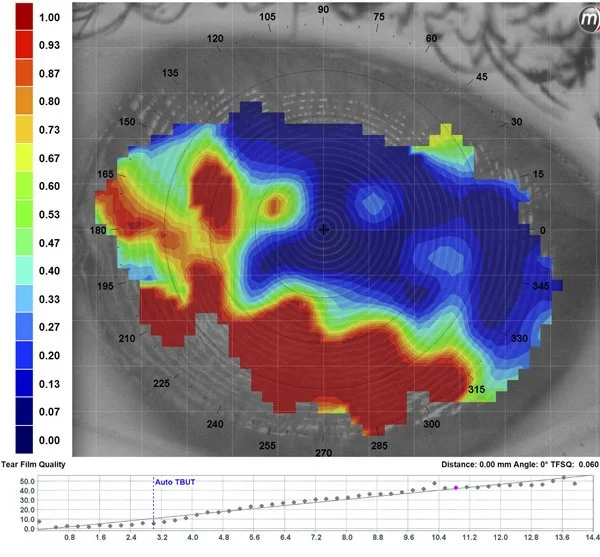
By evening, the small strains on your tear film have added up. That is why many people feel fine at breakfast and sore by bedtime.
- Screens and blinking. Studies have shown we blink less while concentrating on a screen, so the surface dries between blinks. An evening on the laptop or phone adds to a day at work.
- Contact lenses late in the day. Lenses sit in the tear film and draw on it. Comfort often fades in the last few hours of wear.
- Air-conditioning, heating and fans. Moving, dry air speeds up evaporation, especially a fan or vent pointed at your face.
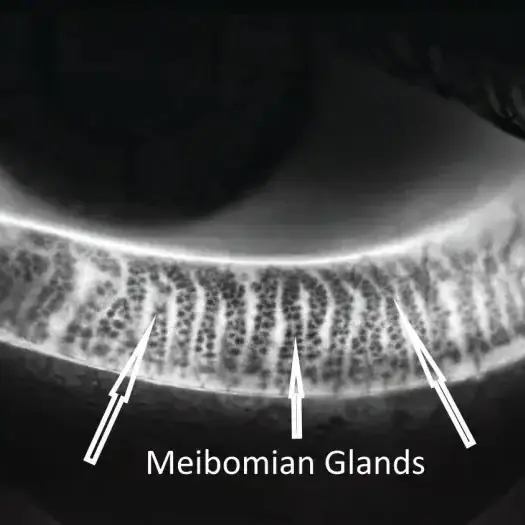
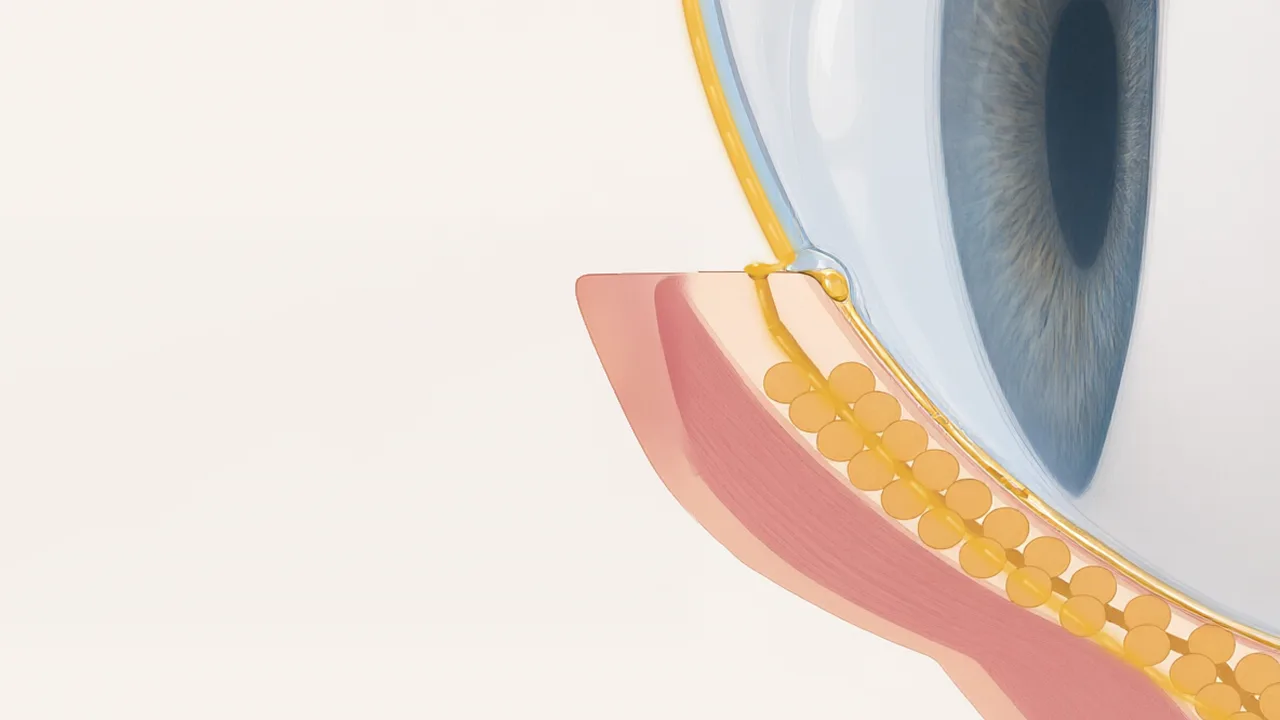
- The oil glands in your eyelids. These glands make the oily top layer that slows evaporation. When they are blocked, called meibomian gland dysfunction, tears break up quickly. Inflamed lid margins, or blepharitis, often come with it.
- Medications. Some common medicines can reduce tears. Never stop or change one yourself. Mention it at your appointment or to your GP.
What if my eyes are worst when I wake up?
Dryness that is worst on waking can have extra causes, such as eyelids that do not fully close during sleep. Research has linked this with dry eye and poorer sleep. We cover it in why your eyes are dry when you wake up.
When should I see an optometrist about dry eyes at night?
It has gone on for a few weeks and drops only help for a short while
It is affecting your sleep, your screen work or your contact lens wear
Your eyelids look red, crusty or swollen along the lash line
At your assessment
We look closely at your tear film and eyelids. Non-invasive tear break-up time (NIBUT) measures how long your tears stay stable between blinks, and meibography photographs the oil glands in your lids. Both tests are quick, and nothing touches the surface of your eye. You leave knowing what we found and what we suggest next.
Find out why your eyes are dry at night
How we help with dry eyes at night
The consultation is bulk-billed for eligible Medicare cardholders, and the Dry Eye Test Package is $50. The IPL Treatment Pathway is $850 all-inclusive: the assessment and four sessions over three months. If you go ahead with IPL, the $50 test package is part of the $850.
Assess
We find the cause with a dry eye assessment.
Plan
We explain what we found and agree a plan that fits your evenings, your screens and your contact lenses.
Treat
Many people do well with home care and lid care. For blocked oil glands, IPL (intense pulsed light) uses gentle flashes of light around the eyelids to help the glands work better, and most patients notice improvement.
Review
We repeat the tear film tests, compare them with your first visit, and adjust the plan if we need to.
Drops soothe the surface. The cause decides the treatment.
Lubricating drops are useful, and for some people they are enough. But night-time dryness is a symptom with a cause behind it: tears breaking up too fast, oil glands not doing their job, or something in your day or your medications. When drops stop helping for long, the next step is to find out which it is, not to buy a different bottle.
FAQ
Questions about dry eyes at night
Why do my eyes water if they are dry?
When the eye surface dries, it can trigger a rush of reflex tears. Those tears are mostly water and do not stay on the eye for long, so the eyes water and still feel dry. It is a common sign of dry eye.
Is it safe to use eye drops every night?
Preservative-free lubricating drops are generally suited to regular use. Drops that promise to take the redness out are not meant for every night. If you need drops nightly, or they stop helping, have your eyes assessed so the cause can be treated.
How will we know if treatment is working?
We measure it. At your review we repeat the tear break-up test and compare it with your first visit, alongside how your eyes feel in the evening. With IPL, most patients notice improvement over the course of treatment.
Is IPL safe, and what happens if I stop?
IPL does not suit everyone, so we check your skin, your eyes and your medications first, and your eyes are shielded during each session. Dry eye tends to be ongoing, so if you stop, symptoms can slowly come back. At your review we talk about whether further sessions would help.

Written by the optometrists at Concord Eyecare.
References (4)
- Craig JP and colleagues, TFOS DEWS II Definition and Classification Report, The Ocular Surface, 2017: what dry eye is and the role of tear evaporation.
- Tsubota K and Nakamori K, Dry eyes and video display terminals, New England Journal of Medicine, 1993: reduced blinking during screen work.
- Takahashi A and colleagues, Nocturnal lagophthalmos and sleep quality in patients with dry eye disease, Life, 2020: eyelids that do not fully close during sleep were more common in people with dry eye, and linked with poorer sleep.
- Jones L and colleagues, TFOS DEWS II Management and Therapy Report, The Ocular Surface, 2017: lubricants, warm compresses, lid hygiene and IPL as management options.
Comfortable evenings start with the cause
A dry eye assessment at our North Strathfield practice helps find the cause and plan care that suits you.