

MiyoSmart iQ · Myopia Control · Sydney
MiyoSmart iQ: glasses that slow your child's myopia
HOYA's newest myopia-control lens — and what we now fit for most children starting myopia control glasses. Research on the earlier DIMS lenses it is built on shows around 60% slower progression, when the lenses are fitted right and worn all day — 12 hours or more. This page covers both halves.
- Looks and feels like ordinary glasses
- Suits most children from around age 4
- Lenses plus 12 months of reviews in one package
What is MiyoSmart iQ?
One clear zone for seeing. Hundreds of tiny zones telling the eye to slow down.
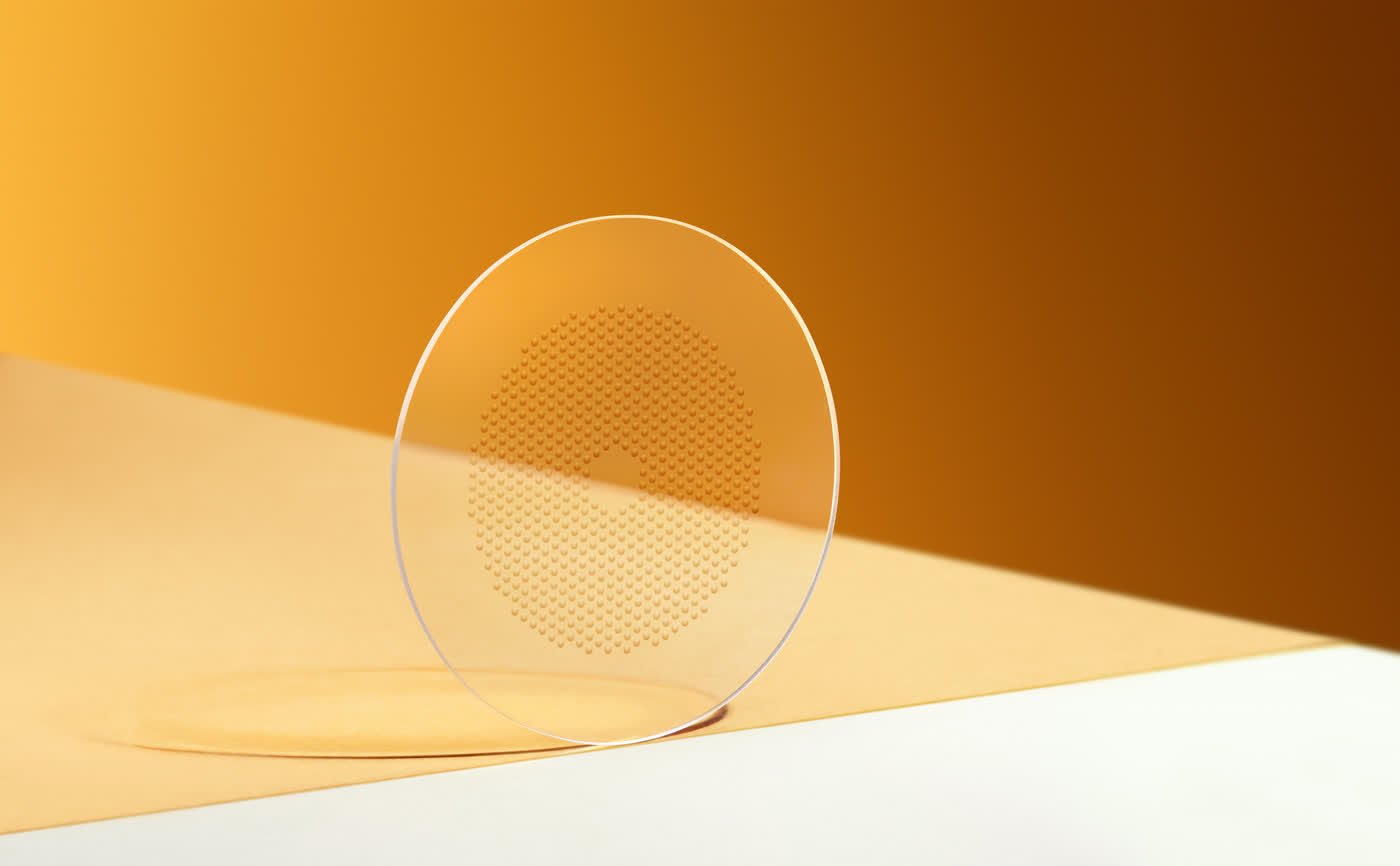
MiyoSmart iQ is the newest version of HOYA's MiyoSmart spectacle lens for slowing myopia (short-sightedness) in children. It looks like an ordinary lens — your child sees clearly through the centre, while tiny treatment segments across the lens send a gentle “slow down” signal to the growing eye.
Read the full explanation of how DIMS works
Myopia gets worse because the eye grows too long. In a standard lens, light focuses behind the peripheral retina — and that is the biological cue that tells the eye to keep stretching. DIMS lenses interrupt that signal. The central clear zone corrects your child's vision as normal, so they see sharply straight ahead. Around it sits a honeycomb of around 400 tiny defocus segments, delivering myopic defocus across the peripheral retina — the “slow down” signal the eye needs to stop elongating.
Looks like an ordinary lens
Impact-resistant, like safety glasses
UV protection built in
Around 400 treatment segments
MiyoSmart iQ vs standard MiyoSmart
Same idea, aimed more precisely.
Both lenses use HOYA's DIMS technology. The iQ keeps the core design but makes three changes: a smaller clear central zone, treatment segments moved closer to the centre to target a more responsive part of the retina, and a slightly stronger, wider treatment area. The goal is a more precisely placed slow-down signal — and iQ is now what we fit for most children starting out.
Smaller clear centre
6.9 mm, down from 9.4 mm on the original.
Segments moved inward
The treatment segments sit closer to the centre and extend across a wider treatment area.
Stronger defocus power
HOYA raised it from +3.50 D to +4.50 D in each segment. That is a design change, not a measured result.
See the full original-versus-iQ specification table
| Feature | Standard MiyoSmart | MiyoSmart iQ |
|---|---|---|
| Core technology | DIMS | DIMS — Triple Enhanced Design |
| Central clear zoneThe window your child looks through | 9.4 mm across | 6.9 mm across |
| Treatment segments | A honeycomb ring of small segments around the clear centre | The same segments, moved inwards towards the centre |
| Treatment zoneHow far the segments reach across the lens | 33 mm across | 41 mm across — further out, including the wider area a larger frame keeps |
| Strength of each segmentThe defocus power built into each segment | +3.50 D in each segment | +4.50 D in each segment |
| Lens coating | Standard MiyoSmart coating | Spark coating — with a 12-month scratch warranty |
| Appearance | Like a normal lens | Like a normal lens |
| Available in Australia | Now | Now — generally available since August 2026 |
| Evidence | Peer-reviewed, multi-year | Early trial data, not yet peer-reviewed |
| Price | $600 per pair — existing wearers | $720 per pair, in a 12-month package |
Why a precise fit matters more with iQ
A smaller clear zone leaves less room for error.
Key specifications
- Clear zone: 6.9 mm on iQ, down from 9.4 mm on the original.
- Why it is smaller: it brings the treatment segments closer to the centre of the lens.
- Defocus power: +4.50 D in each segment, up from +3.50 D.
- Treatment zone: 41 mm across, so the segments reach further out.
- What it means for the fit: a smaller window for the pupil to sit inside, so the centring has to be right.
We measure your child's pupil centres digitally, in the frame they will actually wear and in their natural head position, then check the finished lenses against that measurement before the glasses leave the practice — and check it again at every review.
How big is the clear window, in millimetres?
To give you a feel for the scale: on the earlier MiyoSmart lens the clear window is 9.4 mm across — a little under a centimetre — with the treatment segments packed in a honeycomb ring around it. Those segments only do their job when they sit in the right place relative to the pupil — and on the iQ, with a smaller window and the segments moved inward, there is less margin before the pupil starts to reach them.
Frame sitting correctly
Frame has slipped
Pupil aligned with clear centre
Pupil reaches treatment area
Measure · verify · re-check
Correct alignment: the pupil sits within the clear centre.
When a frame slips: the pupil moves toward the treatment area.
None of that is a reason to worry — it is just where the care actually goes. The one thing that helps most from your side: if the glasses start sliding down the nose or sitting crooked, bring them in. An adjustment takes a few minutes. The diagram shows what we are aiming for, and what changes when the frame slips.
Keeping the glasses working
A precise fit isn't a comfort thing — it decides whether the treatment works.
MiyoSmart lenses contain a central correction zone surrounded by hundreds of defocus segments. Those segments are what slow myopia progression — but if the lens isn't positioned correctly in front of the eye, they don't align with the peripheral retina, and the myopia control effect is reduced or lost entirely. If it's not fitted properly, there's no treatment effect to speak of.
Our 5-step fitting process, in full
01 · Children's Myopia Assessment. A full eye examination including refraction and progression-rate assessment, with axial-length measurement included. This establishes your child's starting point and whether MiyoSmart iQ is the right option.
02 · Frame selection that holds the lens in place. Not every children's frame suits myopia control lenses — it has to keep the optical centre reliably lined up with your child's pupils. We stock frames that work well for this, including purpose-built options like Tomato Glasses (adjustable nose pads, flexible temples, secure fit) alongside designer children's brands.
03 · Precision digital measurements. We capture exact pupil distance and height within the chosen frame, taken with the frame on your child's face in their natural head position. Not estimated, not measured from a chart — even 1–2 mm matters.
04 · Lens centration verification. When the glasses arrive, we verify the optical centres align precisely with your child's pupils before handover.
05 · Frame adjustment and what to watch at home. Nose pad position, temple length, tilt and vertex distance all adjusted for your child — and we show you the signs the glasses are slipping, sitting unevenly, or need readjustment.
What can go wrong with a poor fit
Wrong frame size or shape — the optical centre won't align with the pupils, so the defocus segments end up in the wrong place.
Inaccurate pupil measurements — even 1–2 mm of error in pupil distance or height shifts the treatment zone away from its optimal position.
Frame sliding, tilting, or sitting too far — lens position changes with every movement; the zones need to stay centred and stable.
Inadequate frame adjustment — loose or generic adjustment undermines the whole technology. Precision is non-negotiable.
What that looks like in practice
Measured, not estimated. Pupil centres captured digitally with the chosen frame on your child's face — not read off a chart or averaged from a table.
Verified before handover. When the glasses arrive we check the optical centres against that measurement before we hand them over.
Re-checked as they grow. Faces change and frames move. We look at the fit again at each six-monthly review, alongside the eye-growth measurement.
Ready when you are
Is MiyoSmart iQ right for your child?
Does MiyoSmart iQ work?
Years of trials behind the design — and early results on the refinement.
MiyoSmart iQ is not a different technology. It is HOYA's DIMS design, with the treatment signal placed more precisely.
Slower prescription change, and slower eye growth
Over 2 years, against ordinary lenses, in children who wore the glasses all day — 12 hours or more.
The effect is sustained, not borrowed
At 3 and 6 years, follow-up studies found the early slowing was still there, as long as the child kept wearing the lenses.
21.5% of children in that 2-year trial had no myopia progression at all. These numbers come from trials where lenses were fitted precisely and worn full-time — get both right and your child has the best chance of results like these; miss one and the effect drops.
The iQ's own results, so far
Encouraging — but early.
Almost no progression on average in year one
Over 12 months, children in the iQ group — wearing the lenses all day — averaged almost no change in prescription (+0.05 D), versus about half a dioptre of worsening (−0.53 D) in children wearing ordinary lenses. HOYA reports 9 in 10 children had no clinically relevant progression* in year one. The trial followed 196 children aged 4–12 in Hong Kong.
*Clinically relevant = prescription worsening more than 0.50 D in 12 months (HOYA's definition). HOYA describes this as “over 100% efficacy” — meaning the iQ group didn't progress on average while the comparison group did.
How we read this: interim 12-month data from a single centre, presented at a conference (ARVO 2026) — not yet peer-reviewed or published in a journal, and manufacturer-funded (HOYA). The comparison group progressed quickly, which makes the gap look larger.
What the iQ changes, per HOYA
- A smaller central clear zone — the clear window is tighter, which brings the treatment segments closer in to the centre of the lens.
- A stronger defocus signal — more treatment power than the earlier design carries.
- An extended treatment zone — 41 mm across, so the treatment segments reach further out across the lens, including into the wider area a larger frame keeps.
HOYA's aim with these three changes is a treatment signal that is both more precisely placed and slightly stronger, on a design already backed by trials. That is the design intent, not a measured gain. No trial has yet compared iQ against the lens it refines — the iQ study above is against ordinary lenses — so if you see a claim that iQ works better than the lens it refines, there is no published head-to-head behind it. We treat the refinement as sound reasoning and read the data as it comes.
Why we read the iQ results cautiously — the full list
- 12-month interim data — not the final trial result
- From a single centre (Hong Kong), one ongoing trial of 196 children
- Presented at a conference (ARVO 2026) — not yet peer-reviewed or published in a journal
- Manufacturer-funded (HOYA)
- The comparison group progressed quickly, which makes the gap look larger
- No long-term or post-stopping (rebound) data yet
Bottom line: the design underneath iQ has years of evidence behind it, and the refinement's own data is encouraging but early. We'll talk you through what that means for your child — and whether iQ or the standard lens is the better call — at your appointment.
the wear time behind the trial results
The other half: wear time
Even a perfect fit does nothing in the schoolbag.
Here's the caveat parents need to hear before committing. The trial results are based on children wearing MiyoSmart constantly except when sleeping or showering — around 12 hours a day. Partial wear reduces the benefit proportionally. If your child takes their glasses off at school or forgets them at weekends, they won't get the full treatment effect, even though they're wearing “the lens.”
What works
- On before breakfast, off at bedtime. The simple rule most of our families follow.
- Same pair every day. No switching to “weekend glasses” without the treatment design. Consistency is the whole game.
- Comfortable, well-fitted frames. Glasses that slip, pinch or fog up get taken off — we spend proper time at the fitting to make sure they stay put.
What doesn't
- Glasses “for reading only.” Treatment only happens when the lens is in front of the eye. Part-time wear = part-time effect.
- Removed for sport or outdoor play. Several hours off daily significantly reduces the clinical benefit.
- Self-conscious about the frame. If your child doesn't like their glasses, they won't wear them. Frame choice is a compliance decision.
- Forgotten between houses. A spare pair at each house solves this — we'll discuss it at the fitting if it's relevant.
Fit and wear time are two sides of the same equation. Perfect fit + part-time wear = reduced effect. Full-time wear + poor fit = reduced effect. You need both — which is why the fitting process and the wear-time conversation happen together at the assessment. And if your child genuinely can't manage all-day wear, we'd look at whether a different treatment suits them better, rather than assuming the glasses are doing the job.
Who MiyoSmart iQ suits
The right treatment matters more than the brand name.
There is no single best myopia treatment. The right one depends on your child's age, prescription, lifestyle, and how reliably they will wear it.
A great fit
- Age 4+ with mild to moderate myopia. The sweet spot: children at the start of their myopia journey, under −6.00 D.
- Already wears glasses without fuss. If glasses are part of the routine, MiyoSmart iQ looks identical — the switch is seamless.
- Families who prefer non-contact, non-drop. No lens insertion, no cleaning routine, no eye drops. Treatment sits in the glasses they already wear.
- Younger kids not ready for contacts. For children under 8 or those not ready for lens hygiene, glasses are the practical starting point.
Maybe another option
- High myopia (above −6.00 D). DIMS alone may not be enough. We'd discuss combining with atropine or looking at Ortho-K.
- Kids who remove their glasses. If they come off at school or for sport, the treatment effect drops fast. Contact lenses may work better.
- Contact sport without glasses. Some sports are glasses-off by rule. If that's most of your child's week, Ortho-K might suit better.
- Rapid progression in an older child. Fast progressors late in the myopia curve may need combination therapy from day one.
How the four treatments compare, at a glance
| Treatment | Efficacy | Age | How it's worn | Best for |
|---|---|---|---|---|
| Myopia-control glasses MiyoSmart iQ · Stellest 2.0 | MiyoSmart ~60%, Stellest 55–67% (trials on the earlier lenses, worn 12+ hrs/day) | 4+ | Daytime glasses, 12+ hrs/day | Younger kids, first-time wearers, simplicity |
| Ortho-K | 50–60% (research) | 6+ | Overnight lenses only | Active kids, sport, glasses-free daytime |
| MiSight | 59% (trial) | 8–12 (start) | Daily disposable, 10+ hrs/day | Older kids, contacts preference |
| Atropine drops | — | 4+ | Prescribed eye drops | Younger children, or alongside glasses when progression is fast |
Weighing up the treatments themselves? See all four compared side by side.
Why fit MiyoSmart iQ with us
Fitted by an optometrist who's worked with this lens from the start.
Many practices can order MiyoSmart lenses. What separates the fittings is everything around the lens — the measurements, the frame, the verification, and whether anyone checks the treatment is actually working.
Experience from launch
Dr Mark Joung was one of the first Australian optometrists to fit MiyoSmart and fitted iQ before general release.
Digital centration
Measurements are taken in the chosen frame and the finished lenses are verified before collection.
Axial-length tracking
The Zeiss IOLMaster 500 measures eye growth directly in millimetres at reviews.
We measure whether it's actually working
We re-measure at every six-monthly review, so the plan changes when your child's eyes do. How it works →
Read the full practice and monitoring details
- Fitting MiyoSmart since the Australian launch. Dr Mark Joung was one of the first Australian optometrists to prescribe MiyoSmart, with hundreds of fittings since — we know which children do well on MiyoSmart or Stellest alone, and which ones need a combination approach. He was fitting MiyoSmart iQ before its general release.
- Precision fitting with frames chosen for the job. Not every children's frame holds myopia control lenses correctly. We fit in frames chosen to keep the optical centre precisely aligned — including purpose-built options like Tomato Glasses — and every pair is verified with digital pupil centration measurements, re-checked at collection.
- Zeiss IOLMaster 500 biometry on-site. The device ophthalmologists use before surgery. Measuring eye growth directly, in millimetres, is the gold standard for tracking progression — so you can see whether the lenses are slowing eye growth rather than guessing from prescription change.
How much do MiyoSmart iQ lenses cost in Sydney?
Not just lenses — a 12-month management package.
MiyoSmart iQ lenses are $750 per pair. Which lens suits your child is something we work out together at the assessment — and either way, the lenses come as part of a 12-month myopia management package, not just the glasses. The frame is chosen separately, and the six-monthly eye-growth scans are charged as they happen — both are set out below.
per pair · 12 months of care
✓ is included in the $750. + is charged separately.
MiyoSmart iQ lenses with the Spark coating — which carries a 12-month scratch warranty
A remake at no charge if the prescription changes by 0.50 D or more within 12 months
The scheduled review consultations for the first 12 months — the visits set out below (the $45 axial-length scan is charged separately)
Precision digital pupil-centration measurements, verified again at collection
Frame selection from our range, chosen to hold the lens in position
A full written quote before anything is ordered
Frames: children's frames from $150. Tomato Glasses, built to hold myopia-control lenses in the right position, are $210.
Getting started: the Children's Myopia Assessment is $95 out of pocket, with axial-length measurement included.
Staying on track: six-monthly axial-length review scans are $45 each — that's how we confirm the lenses are actually slowing eye growth in millimetres, not just assume it from the prescription.
Already wearing standard MiyoSmart or Stellest? Children continue at $600 per pair.
The package runs to a set schedule, so you know what’s coming and when. Three visits in the first 12 months, then every 6 months from there.
We check how the glasses are sitting and how your child is getting on with them.
We recheck the prescription and measure eye growth. The consultation is included; the axial-length scan that goes with it is $45.
The same again, and every 6 months from there — that scan is how we confirm the lenses are slowing eye growth, rather than assume it from the prescription.
In between those visits, if anything changes — blurred vision, a broken or loose frame, glasses that stop sitting right — call us and we’ll see your child, whether or not a review is due. We’d much rather see them early than wait for the next date.
Health funds and paying on the day
Many extras policies include children's glasses under the optical allowance — cover varies by fund and level, so it's worth checking yours. We process HICAPS on the day.
MiyoSmart iQ questions, answered
The questions parents ask before they book.
What's the difference between MiyoSmart and MiyoSmart iQ?
Both use HOYA's DIMS technology to slow myopia. The iQ is the newer version, with a refined design that places the treatment signal more precisely. It's what we fit for most children starting myopia control glasses, and the standard lens still has years of peer-reviewed evidence behind it. For a child already wearing the standard lens, whether to change depends on how their eyes are tracking rather than on which lens is newest: if the myopia is still progressing at reviews, that is worth raising, and we'd talk through what can be changed.
When can my child get MiyoSmart iQ?
Now. It has been generally available in Australia since 1 August 2026. We were fitting it before it launched here, and it's what we fit for most children starting myopia control glasses. Book a Myopia Assessment and we'll talk through whether it suits your child.
Is MiyoSmart iQ proven to work?
The DIMS design underneath it has strong peer-reviewed evidence. That design slowed myopia progression by about 59% over two years, in children who wore the glasses all day, around 12 hours or more, in trials run before the iQ refinements. The iQ refines where that signal lands, and its own trial data is promising but still interim, from a single centre and not yet peer-reviewed, so we read it carefully and explain it in person.
What age can my child start?
From around age 4 onwards. MiyoSmart is particularly suitable for younger children who aren't ready for contact lenses. For most families it's the simplest of the myopia control options.
Do they look different from normal glasses?
No. MiyoSmart iQ and Stellest 2.0 lenses look and feel identical to regular glasses. Your child and their friends won't notice any difference.
Why does fitting matter so much?
The treatment zones have to align precisely with your child's pupils. MiyoSmart iQ's smaller clear zone leaves even less room for error. Poor frame selection or inaccurate measurements can significantly reduce the myopia control effect: same lens, same brand, weaker outcome.
What frames do you recommend for myopia control lenses?
Not every children's frame is suitable. The frame has to hold the lens reliably in the correct position. We stock a range that works well for myopia control, including purpose-built options like Tomato Glasses and several designer children's brands. We'll help you pick the right one at the fitting.
What if my child's prescription changes?
The package includes a 12-month warranty for significant changes (0.50 D or more). We replace the lenses at no additional cost. MiyoSmart iQ's Spark coating also carries a 12-month scratch warranty. The scheduled review consultations are included for the first 12 months. The schedule is set out in the pricing section.
Can MiyoSmart be combined with other treatments?
Yes. If your child keeps progressing quickly on glasses alone, low-dose atropine is one of the options we'd talk through, along with its side effects. The glasses also work as a backup on days when Ortho-K or MiSight lenses aren't worn.
MiyoSmart or Stellest: which is better?
Both have good clinical trial evidence behind them. We predominantly fit MiyoSmart, and have done since its Australian launch. Stellest 2.0 is also an excellent option. We'll recommend the better match for your child at the assessment.
How will we know the lenses are working?
Not from whether the prescription moved. A child on treatment can still need a slightly stronger lens and be doing well for their age. We measure the length of the eye with the IOLMaster at each six-month review and compare it with the normal growth band for their age. That number, not the prescription, tells us whether the lenses are slowing growth.
Is MiyoSmart safe?
It's a spectacle lens, so nothing touches the eye and there's no infection risk to manage. The things that decide safety and results are the fit and the hours worn. In our experience some children notice a slight blur in the outer part of the lens for the first week or two while they adapt, and it settles. The lenses are impact-resistant polycarbonate with UV protection built in.
What happens if we stop?
Nothing dramatic. The lenses only work while they're worn, so if you stop, the eye simply goes back to growing at its natural rate for your child's age. Whether it speeds up beyond that rate afterwards is something we plan for. In ortho-K, a Hong Kong study found it did in children who stopped at 14 or younger, so we plan the stop the same way for every treatment: not on a birthday, but after two years of stable eye-length measurements. For most children that means the school years — about half are still changing at 15 and a quarter at 18.
How often are check-ups?
A fitting check at 1 month, then every 6 months for progression monitoring. That's three visits in the first year. Those scheduled review consultations are included for the first 12 months. At each progress review we measure axial length with the Zeiss IOLMaster, because that's how we confirm the lenses are actually slowing eye growth, not just assume it from the prescription. That scan is $45 and is charged separately.
Where these numbers come from
- COMET Group. Myopia stabilization and associated factors among participants in COMET. Invest Ophthalmol Vis Sci 2013.
- Cho P, Cheung SW. Discontinuation of orthokeratology on eyeball elongation (DOEE). Cont Lens Anterior Eye 2017.
Still weighing it up?
Where to read next.
Clinical sources
Families come to us from across Sydney
Myopia control worth the trip
Families travel to our North Strathfield practice from right across Sydney for myopia control — we welcome children and families from across the city.
Book your child's Myopia Assessment
Ready to see if MiyoSmart iQ is right for your child?
Book a Myopia Assessment and we'll measure axial length with the Zeiss IOLMaster, assess progression risk, and recommend the right treatment for your child's age and lifestyle. If glasses are the path, we'll walk you through exactly how we fit them — digital centration, frame selection, verification at collection — because a precise fit gives your child the best chance of the results seen in the trials.
Book a Myopia Assessment or call (02) 8765 9600