
EYE EXAMINATIONS · CONCORD
Comprehensive Eye Examinations
in Concord
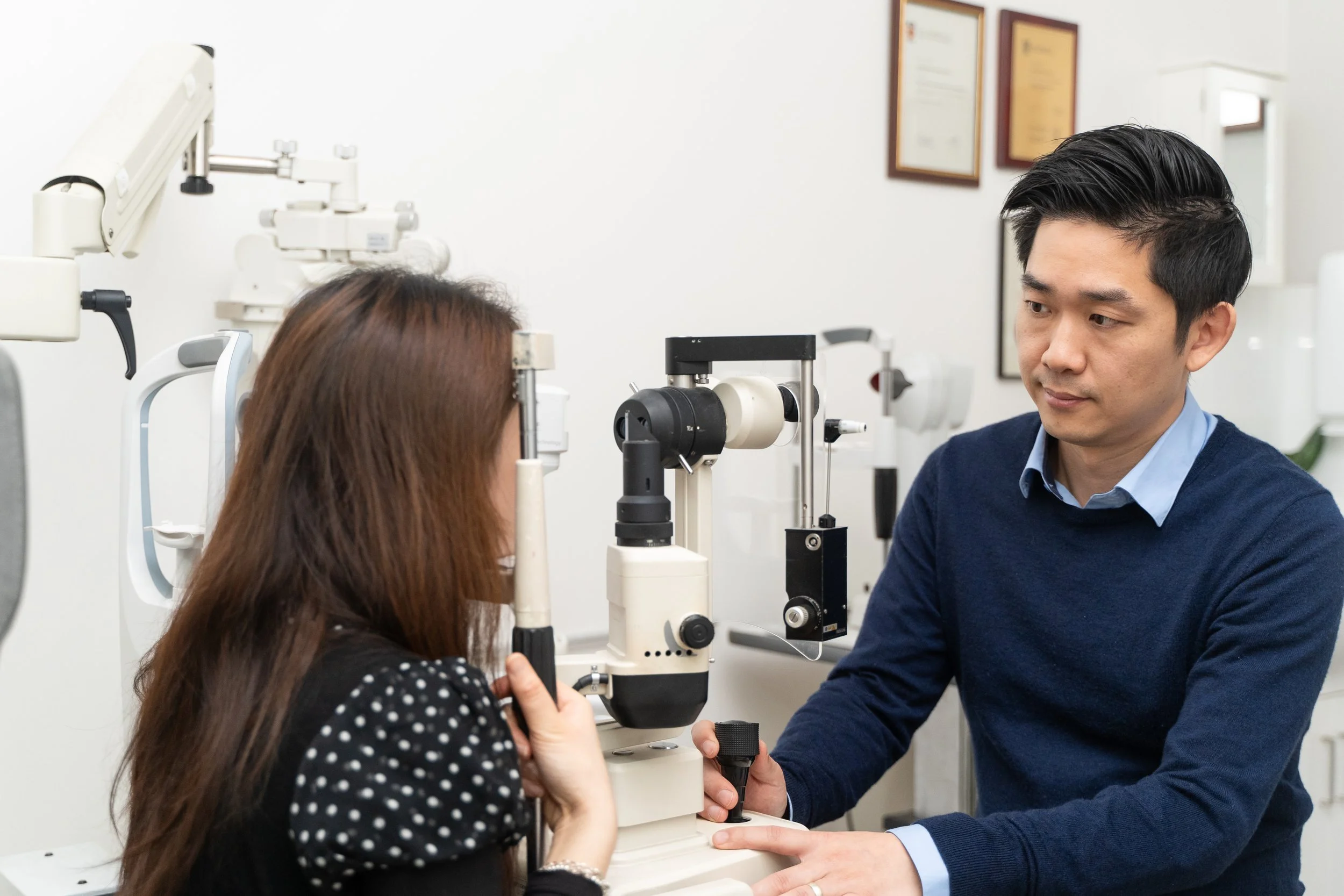
A proper eye test — not a quick look and a prescription. We take 20–30 minutes to check your vision, eye health, and screen for conditions you'd never notice yourself. Medicare bulk billed. All health funds accepted via HICAPS.
WHAT'S IN AN EYE TEST
What's included in a comprehensive eye examination?
Short answer: A comprehensive eye examination at Concord Eyecare takes 20–30 minutes and includes vision testing, refraction, eye health assessment, retinal photography, eye pressure measurement, and screening for conditions like glaucoma, macular degeneration, and diabetic eye disease. All standard examinations are bulk billed through Medicare.
It's far more than reading letters off a chart. We use the full range of modern diagnostic equipment — autorefractor, slit lamp, tonometer, and a retinal camera — to build a complete picture of how your eyes are working and whether there's anything you should know about.
If we spot something that needs further investigation, we'll explain exactly what it is, what it means, and what your options are. No jargon, no upselling, no pressure.
THE EXAMINATION PROCESS
What happens during an eye test?
Short answer: Every comprehensive eye examination covers six core areas: your vision (what you can see), your refraction (whether you need glasses), your eye muscles and alignment, your eye pressure, the front of your eye, and the back of your eye. Each step takes a few minutes and together they give us the full picture.
Vision testing
We check how clearly you see at distance and near — using letter charts, picture charts for kids, and objective measurements that don't rely on your answers.
Refraction
We measure whether you need glasses — and if so, your exact prescription. We use an autorefractor for an objective starting point, then fine-tune with lenses until you can see as clearly as possible.
Eye pressure
Elevated eye pressure is one of the key risk factors for glaucoma. We measure it with a non-contact tonometer — no drops, no eye contact, just a quick puff of air.
Front of the eye
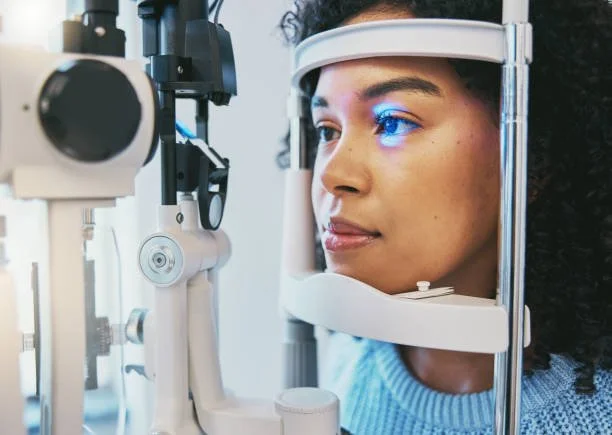
Using a slit lamp (a specialised microscope), we examine your lids, lashes, cornea, iris, and lens for anything from dry eye to early cataracts.
Back of the eye
We take a high-resolution photo of your retina and optic nerve so we can check for bleeds, tears, macular changes, and signs of glaucoma. The image is kept on file so we can compare it at your next visit.
Binocular vision
We check how well your eyes work together — how they track, focus, and coordinate. Important for anyone with headaches, eye strain, or reading difficulties.
ADVANCED IMAGING
When do you need an OCT retinal scan?
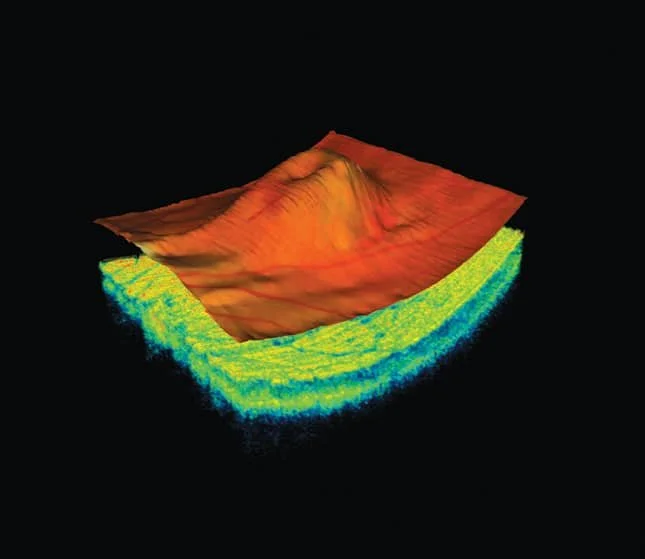
Short answer: An OCT (Optical Coherence Tomography) scan is a painless, 60-second imaging test that takes a cross-section of your retina and optic nerve. We recommend it only when clinically indicated — typically for patients with a family history of glaucoma, diabetes, macular changes, or unexplained visual symptoms. The scan costs $75 and is not covered by Medicare.
Think of it like an ultrasound, but using light instead of sound. It reveals layers of tissue we can't see any other way — which matters for early detection of glaucoma, macular degeneration, and diabetic retinopathy.
Our approach: We don't recommend OCT scans to every patient. If we think you'd benefit from one, we'll explain why. If we don't mention it, you don't need it. That's the difference between clinical judgement and an upsell.
CONDITIONS WE SCREEN FOR
What eye conditions can an eye test detect?
Glaucoma
Gradual damage to the optic nerve, usually linked to elevated eye pressure. Causes irreversible vision loss — but catching it early means we can usually stop it. No symptoms until it's advanced.
Macular degeneration
Affects the central vision used for reading, driving, and recognising faces. Most common in people over 50. Early detection allows for treatment that can slow progression significantly.
Diabetic retinopathy
Diabetes can damage the small blood vessels in the retina. We check every diabetic patient annually — catching changes early prevents the vision loss this condition can cause.
Cataracts
Clouding of the lens inside the eye — extremely common after age 60. We monitor progression and refer for surgery at the right time (not too early, not too late).
Dry eye disease
Affects around 20% of Australians and is often missed. We assess tear film quality and meibomian gland function during the examination. If found, we offer targeted dry eye treatment including IPL therapy.
Hypertension & vascular disease
The retina is the only place in the body where we can directly see blood vessels. Changes here can be the first sign of high blood pressure, cardiovascular disease, or a stroke risk.
Short answer: A comprehensive eye examination screens for glaucoma, macular degeneration, diabetic retinopathy, cataracts, dry eye disease, and high blood pressure — often before any symptoms appear. Many serious eye conditions are silent in their early stages, which is why regular testing matters. In Australia, over 300,000 people have glaucoma, and around 50% don't know it (Glaucoma Australia, 2024).
Due for your next eye test?
Book online in under 60 seconds, or give us a call.
TESTING FREQUENCY
How often should you have an eye test?
Short answer: Most adults should have an eye examination every 2 years. Children and anyone over 65 should be tested annually. People with diabetes, a family history of glaucoma, or who wear contact lenses should also be tested every year. If you're experiencing any changes in your vision, don't wait — book sooner.
Children & teenagers
Annual eye tests from age 4 — bulk billed through Medicare. Vision problems in children are often missed because kids don't know what "normal" looks like. Learn more about children's eye tests.
Young adults
Every 2 years if you have no symptoms. Every year if you wear contact lenses, work long hours at a computer, or have a family history of eye disease.
Middle-age adults
Every 2 years minimum. This is when presbyopia (needing reading glasses) typically starts, and when the risk of glaucoma, diabetes, and high blood pressure climbs. Explore progressive lens options.
Older adults
Annually. The risk of cataracts, macular degeneration, glaucoma, and diabetic eye disease rises significantly from 65. Early detection makes a huge difference to long-term outcomes.
CLINICAL CREDENTIALS
Why all three of our optometrists are therapeutically endorsed
Short answer: Therapeutic endorsement means an optometrist has completed postgraduate training to prescribe eye medications directly — including antibiotics, anti-inflammatory drops, glaucoma medications, and allergy treatments. Around 60% of Australian optometrists are therapeutically endorsed. At Concord Eyecare, all three of us are — Dr Mark Joung, Dr Vivian Li, and Dr Nikki Peng.
What this means for you, practically: if we find something that needs treatment — an eye infection, inflammation, an allergy flare, or early glaucoma — we can prescribe the medication directly. You don't need a GP referral, you don't wait days for a separate appointment, and you walk out with a script in hand.
It also means we've all done the extra training in ocular pharmacology and disease management. We co-manage more complex conditions closely with ophthalmologists when needed, but for most day-to-day eye problems, we can handle the full treatment ourselves.
YOUR FIRST VISIT
What should I bring to an eye test?
Short answer: Plan on 30–45 minutes for your first visit. Bring any current glasses or contact lenses, your Medicare card, your health fund card if you have one, and a list of any medications you're taking. If you wear contact lenses, try to wear them on the day so we can check how they're fitting.
We'll start with a chat about your eye health history and any symptoms you've noticed. Then we'll work through the examination — we'll explain what each test is as we go, and you can ask questions at any point. At the end, we'll sit down together and go through what we found in plain English, what it means, and what (if anything) needs to happen next.
If you need glasses, contact lenses, or further testing, we'll discuss all your options and costs upfront. No hidden fees, no pressure to buy on the day.
COMMON QUESTIONS
Eye Examination FAQs
Are eye tests bulk billed in Australia?
Yes. Concord Eyecare bulk bills all standard eye examinations through Medicare — no out-of-pocket cost. Every Australian is eligible, and there's no need for a GP referral.
How long does an eye test take?
A standard comprehensive eye examination takes 20–30 minutes. Allow extra time for your first visit — we'll go through your history and explain everything as we go.
Do I need a referral from my GP?
No. You can book an eye test with us directly. For most eye conditions we can also prescribe treatment directly — all three of our optometrists are therapeutically endorsed.
What's the difference between an eye test and a comprehensive examination?
A "comprehensive eye examination" is the full Medicare-rebated assessment covering vision, refraction, and eye health. An "eye test" usually refers to the vision check portion alone. We do the full examination on every visit.
Will I need drops that blur my vision?
Rarely. We use retinal photography and OCT imaging for most examinations, which don't require dilating drops. If drops are clinically needed, we'll explain why and give you plenty of warning.
How much does an OCT scan cost?
OCT scans are $75 and are not covered by Medicare. We only recommend OCT when clinically indicated — not as a routine extra. If we suggest one, we'll explain why.
Can you treat eye infections and prescribe medications?
Yes. All three optometrists at Concord Eyecare are therapeutically endorsed, meaning we can prescribe antibiotics, anti-inflammatory drops, glaucoma medications, and allergy treatments directly — no GP referral needed.
How often should I have an eye test?
Every 2 years for most adults. Annually for children, over-65s, people with diabetes, contact lens wearers, and anyone with a family history of glaucoma or macular degeneration.
EXPLORE MORE
Related eye care services
Children's Eye Care
Bulk billed eye tests for children from age 4. We catch what school screenings miss.
Learn more →Dry Eye Treatment
Expert dry eye diagnosis and IPL therapy. We find the root cause, not just treat symptoms.
Learn more →Progressive Lenses
Premium multifocal lens fitting from Zeiss and Hoya. Precision digital measurements.
Learn more →References
- Glaucoma Australia. (2024). Glaucoma statistics and prevalence. Retrieved from glaucoma.org.au
- Optometry Board of Australia. (2024). Scheduled medicines endorsement for optometrists. AHPRA.
- Australian Institute of Health and Welfare. (2023). Eye health in Australia: key statistics.
- Royal Australian and New Zealand College of Ophthalmologists. (2024). Guidelines for the management of diabetic retinopathy.
BOOK YOUR EYE TEST
BOOK YOUR EYE TEST IN NORTH STRATHFIELD
161 Concord Rd, North Strathfield. Medicare bulk billed. All health funds accepted. Open Monday to Saturday — book online in under 60 seconds.