
MYOPIA CLINIC · NORTH STRATHFIELD SYDNEY
Evidence-based myopia control
for your child.
Ortho-K, MiyoSmart, MiSight and atropine — all four first-line myopia treatments under one roof, in North Strathfield. Three therapeutically endorsed optometrists. No GP referral needed.
ABOUT THE MYOPIA CLINIC
Your child's myopia, taken seriously.
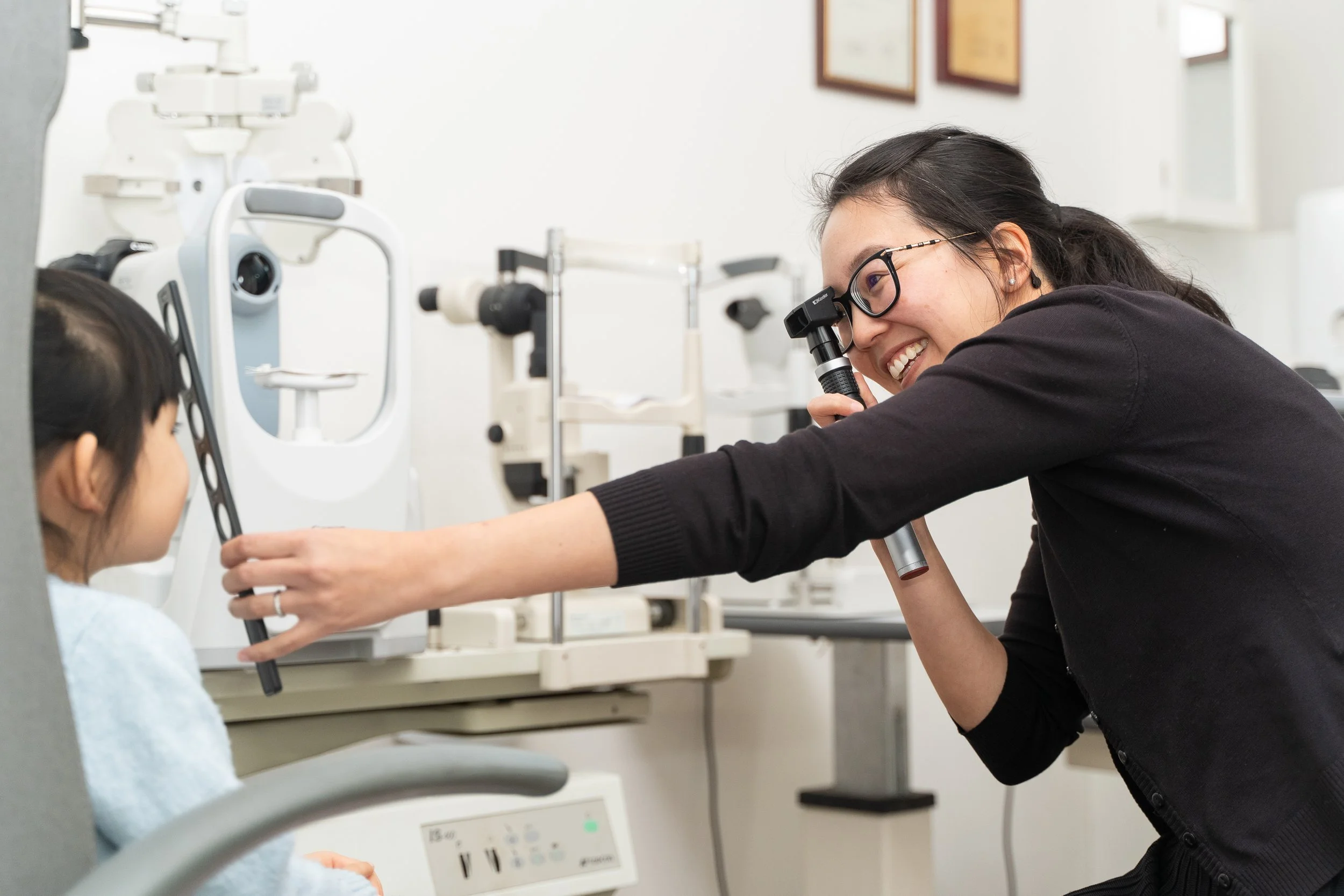
The Myopia Clinic is our dedicated children's myopia service within Concord Eyecare. We focus on one thing: slowing how fast your child's short-sightedness gets worse, so their prescription doesn't keep climbing year after year. Families travel from across Sydney to see us — because most practices don't offer all four first-line treatments under one roof.
We measure axial length — the length of the eye itself, not just the prescription — using the Zeiss IOLMaster 500, the same optical biometer ophthalmologists use for pre-surgical measurements. It's the marker that tells us how your child's eye is actually changing, to a tenth of a millimetre. We offer all four first-line myopia treatments in-house, and because all three of our optometrists are therapeutically endorsed, we can prescribe atropine eye drops directly — no GP referral needed.
Still learning about myopia itself? Start with our guide to what myopia is and why it matters.
FOUR TREATMENT OPTIONS
All proven myopia treatments, under one roof
Ages 6+
Ortho-K (overnight lenses)
Rigid contact lenses worn only at night. Your child wakes up with clear vision — no glasses or daytime contacts needed. Research suggests around 50–60% slowing of myopia progression.
From $1,600 Learn about Ortho-KAges 6+
MiyoSmart glasses
Spectacle lenses with HOYA's DIMS technology. Worn like any normal pair of glasses. HOYA research suggests around 60% slowing when worn 12+ hours per day.
Around 60% slowing Learn about MiyoSmartAges 8+
MiSight daily contacts
Soft, single-use daily contact lenses. Good option for older children and teens who want an active-day solution. FDA trial data shows 59% slowing over three years.
59% slowing Learn about MiSightAges 4+
Atropine eye drops
Low-dose eye drops used once a day, usually at bedtime. Works on its own or combined with Ortho-K, MiyoSmart, or MiSight for fast progressors. No GP referral needed.
Combination therapy available Learn about AtropineThe right treatment depends on your child's age, lifestyle, and how fast their prescription is changing. We'll walk through all four options at your consultation.
TREATMENT MATCHER
Not sure which treatment to ask about?
Five quick questions. We'll suggest options to discuss at your consultation — nothing final, just a starting point for the conversation.
1. How old is your child?
2. Are they highly active in sports, dancing, or swimming?
3. Are they sensitive about having their eyes touched or using eye drops?
4. Are you worried they might lose, break, or forget daytime glasses or contacts?
5. Has their prescription changed significantly in the last 12 months (more than −0.50D)?
Options to discuss at your consultation
Based on age guidelines and your child's lifestyle. All are evidence-based — we'll confirm the best fit at your visit.
Illustrative only. Actual treatment recommendations depend on your child's axial length, prescription, eye health, and lifestyle — we'll assess these at the consultation.
THE TEAM
Three optometrists, one focus on your child's eyes.
All three of us are therapeutically endorsed, which means we can prescribe atropine directly — no GP referral, no delays. Each of us brings extra paediatric and myopia-focused training.

Dr Mark Joung
Principal Optometrist
B.Optom (Hons) UNSW · Grad Cert Ocular Therapeutics · Advanced Paediatric Eye Care UNSW
One of the first Australian optometrists to fit MiyoSmart. Over 800 Ortho-K lenses fitted since 2016.
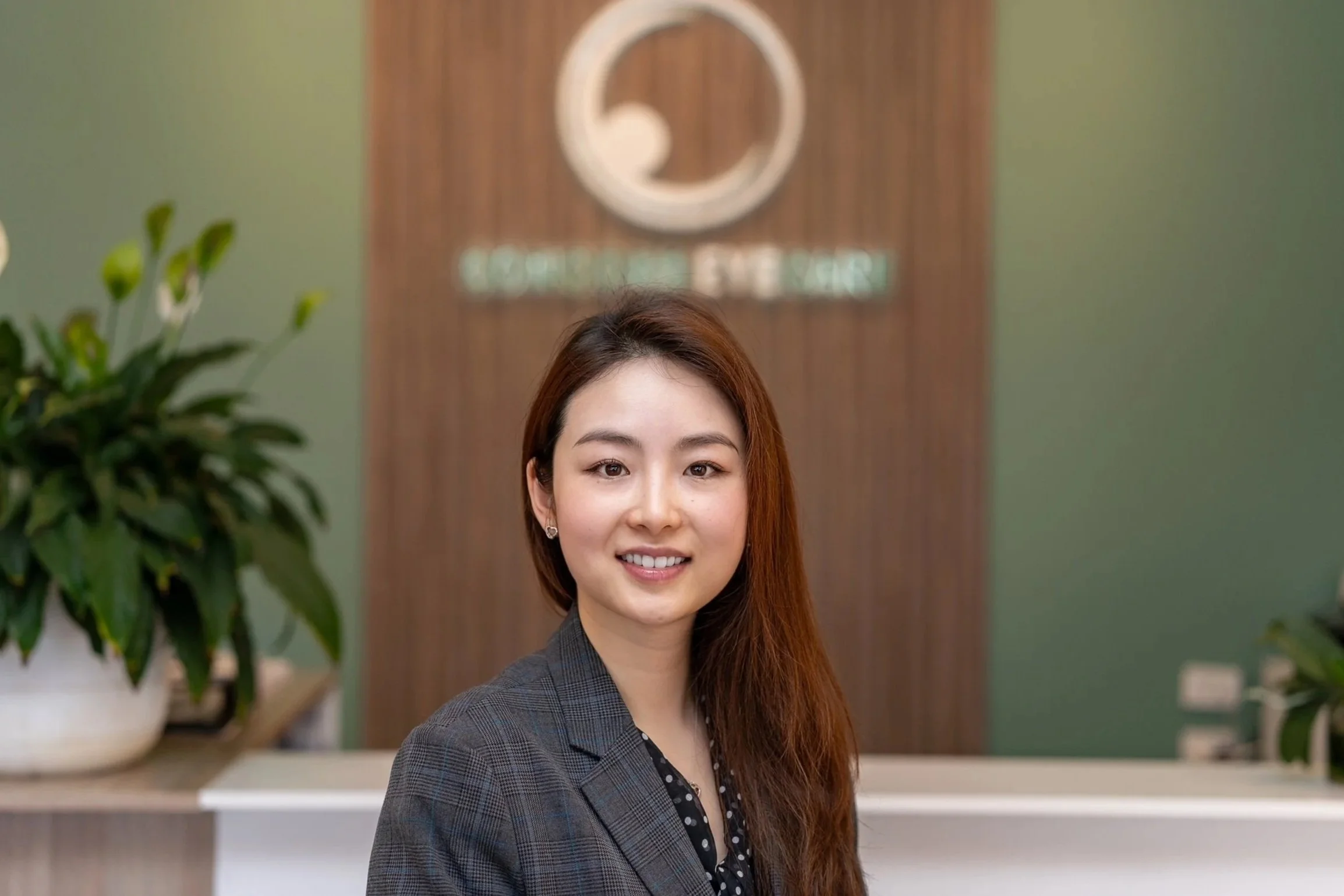
Dr Nikki Peng
Optometrist
B.Optom (Hons 1st Class) UNSW · Grad Cert Ocular Therapeutics · ACO Advanced Children's Vision
Paediatric vision and myopia control focus. Calm, patient approach with children — parents tell us the difference on the first visit.
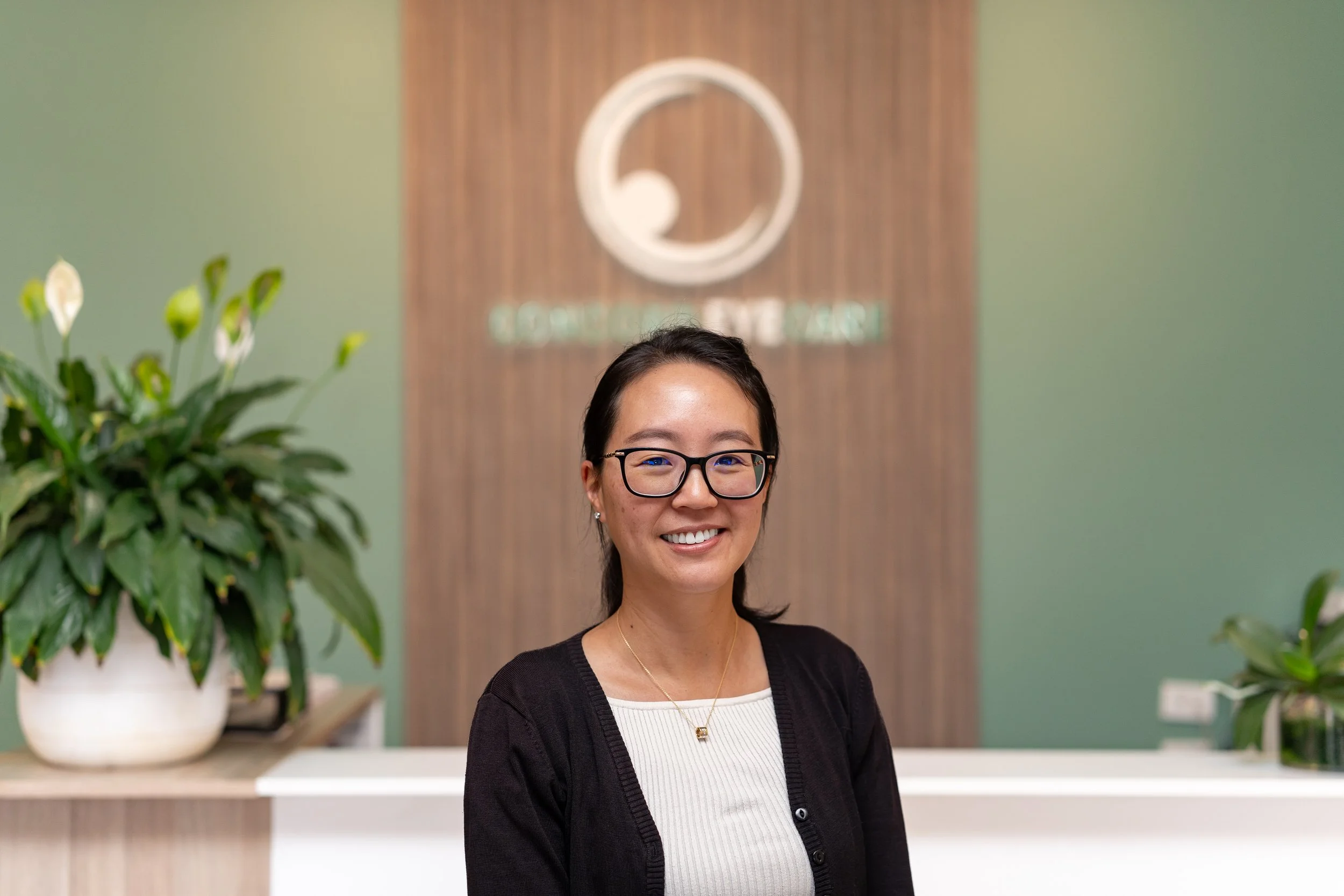
Dr Vivian Li
Optometrist
B.Optom (Hons) · Grad Cert Ocular Therapeutics · ACO Advanced Children's Vision · Behavioural Optometry (ACBO Prize)
Behavioural optometry background — useful for kids with learning-related vision concerns alongside myopia.
WHY THE MYOPIA CLINIC
Four reasons parents drive across Sydney to see us.
All four treatments, one practice
Ortho-K, MiyoSmart, MiSight, and atropine. Most clinics offer one or two. If the first approach isn't working, we can switch or combine without sending you elsewhere.
Atropine prescribed on-site
All three of our optometrists are therapeutically endorsed. That means we can prescribe atropine eye drops directly — no GP referral, no waiting weeks to start treatment.
Zeiss IOLMaster biometry — the gold standard
We track your child's axial length on the Zeiss IOLMaster 500 — the same optical biometer used in ophthalmology for pre-surgical measurements. We measure at every follow-up, so you can see whether treatment is actually slowing progression, not just whether the glasses prescription has changed.
Over 800 Ortho-K lenses fitted
Mark was one of the first Australian optometrists to fit MiyoSmart lenses and has fitted over 800 Ortho-K lenses since 2016. This isn't a side service for us — it's what we focus on.
THE PROGRESSION GAP
See what two dioptres looks like over seven years.
The single clearest way to understand why myopia control matters is to visualise the gap. Drag the sliders to see how your child's age and current prescription shape the projected outcome — with and without evidence-based treatment.
Illustrative estimate only — not a prediction of your child's outcome
This is an educational visualisation based on published population averages. Individual progression varies significantly with genetics, ethnicity, family history, axial length, and lifestyle. A clinical consultation — including axial length measurement, refraction, and corneal topography — is what gives a real answer for your child.
Myopia Progression Estimator
Adjust the sliders to see the projected outcome at age 16.
Methodology: Age-stratified untreated progression rates based on Brennan, Toubouti, Cheng & Bullimore 2021 meta-analysis (Invest Ophthalmol Vis Sci). Treated projection applies a 50% reduction — the approximate real-world average across evidence-based myopia control treatments. Model projects to age 16. Individual efficacy varies by treatment type, compliance, and child-specific factors.
MYOPIA CONTROL FAQs
What parents want to know about myopia control
Do I need a GP referral to book?
No. Myopia is not a GP-managed condition in Australia — optometrists diagnose and treat it directly. You can book a consultation with us without any referral.
How much does a myopia consultation cost?
The initial myopia consultation is bulk billed under Medicare (if your child has a Medicare card). Treatment costs sit on top of that and vary by option — see each treatment page for transparent pricing.
What ages do you treat?
We start axial length monitoring from around age 4–5. Active treatment usually begins from age 6 (Ortho-K, MiyoSmart), age 8 (MiSight), or from age 4 for atropine in fast-progressing cases. Teens are absolutely welcome.
What happens at the first myopia consultation?
A full eye test, a cycloplegic refraction (dilated assessment so the prescription isn't masked by focusing), axial length measurement, and a conversation about which treatment options suit your child. Allow 60–90 minutes.
How often will my child need follow-up appointments?
After starting treatment, we usually see your child every 6 months to measure axial length and prescription. If progression is fast or we're combining treatments, we may see them more often. All reviews are included in Ortho-K package pricing for the first 2 years.
How do you measure whether treatment is working?
We measure your child's axial length — the length of the eyeball itself — at every follow-up using the Zeiss IOLMaster 500 optical biometer. Axial length is the biological marker of myopia progression, and it's far more accurate than tracking prescription changes alone. Over time, you'll see a chart of exactly how your child's eyes are tracking.
THE MYOPIA CLINIC PARENT REVIEWS
What families are saying.
"Mark took the time to explain everything to our daughter at her level. She wasn't nervous at all, and neither were we. The whole team is so good with kids."
"We drove past three optometrists to get here on a recommendation. The care, the equipment, the thoroughness — completely worth it. Our son actually looks forward to appointments."
"Nikki was so patient explaining what axial length is and why it matters — no other optometrist had ever even mentioned it. Finally felt like we understood what was happening with our kid's eyes."
MYOPIA CONTROL CLINICAL REFERENCES
Research behind everything on this page.
- Holden BA, Fricke TR, Wilson DA, et al. Global Prevalence of Myopia and High Myopia and Temporal Trends from 2000 through 2050. Ophthalmology. 2016;123(5):1036-1042.
- Bullimore MA, Brennan NA. Myopia Control: Why Each Diopter Matters. Optom Vis Sci. 2019;96(6):463-465.
- Brennan NA, Toubouti YM, Cheng X, Bullimore MA. Efficacy in myopia control. Prog Retin Eye Res. 2021;83:100923.
- Cho P, Cheung SW. Retardation of Myopia in Orthokeratology (ROMIO) Study: a 2-year randomized clinical trial. Invest Ophthalmol Vis Sci. 2012;53(11):7077-7085.
- Lam CSY, Tang WC, Tse DY-Y, et al. Defocus Incorporated Multiple Segments (DIMS) spectacle lenses slow myopia progression: a 2-year randomised clinical trial. Br J Ophthalmol. 2020;104(3):363-368.
- Chamberlain P, Peixoto-de-Matos SC, Logan NS, et al. A 3-year randomized clinical trial of MiSight lenses for myopia control. Optom Vis Sci. 2019;96(8):556-567.
- Yam JC, Li FF, Zhang X, et al. Two-Year Clinical Trial of the Low-Concentration Atropine for Myopia Progression (LAMP) Study. Ophthalmology. 2020;127(7):910-919.
- Tideman JWL, Polling JR, Vingerling JR, et al. Axial length growth and the risk of developing myopia in European children. Acta Ophthalmologica. 2018;96(3):301-309.
- Gifford KL, Richdale K, Kang P, et al. IMI – Clinical Management Guidelines Report. Invest Ophthalmol Vis Sci. 2019;60(3):M184-M203.
Last clinically reviewed: April 2026.
BOOK YOUR MYOPIA CONSULTATION
The sooner we start, the more we can slow it down
Myopia progresses fastest between ages 7 and 12. Every six months of action matters. No GP referral needed. Appointments Monday to Saturday.